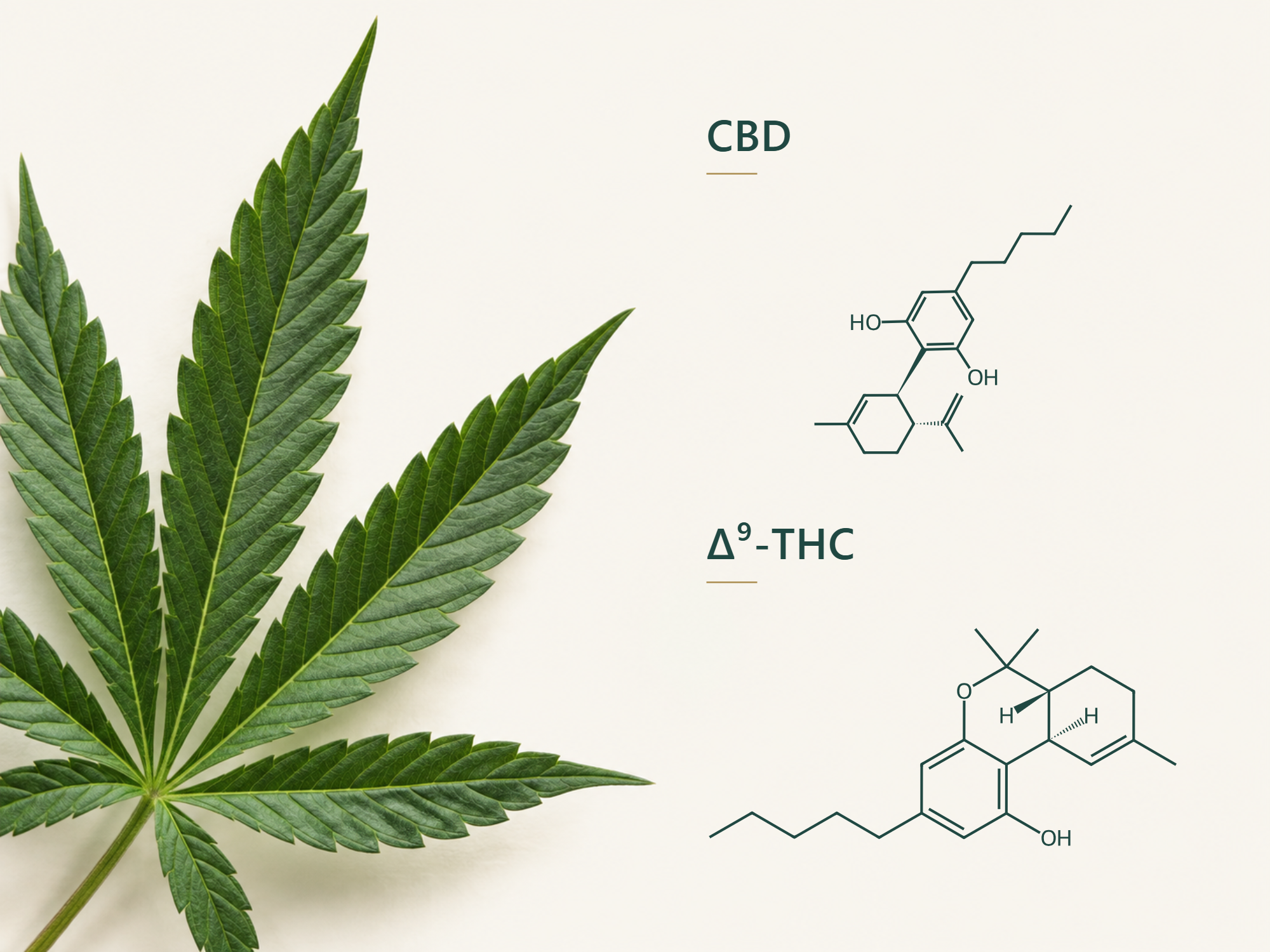
THC often dominates how cannabis is described, but it is one part of a much broader cannabinoid family. Compound identities, their proportions and the finished format all belong in the product record. Two products with the same THC percentage can still have different compositions.
That opens a more useful conversation: which profile a person used, what they hoped to notice and how the experience varied in context. Continuum keeps those details together so observations can be revisited with a clearer product reference.
Research context: NIH: cannabis and cannabinoids · FDA: CBD products.
CBD does not produce the same high as THC, but it can still have adverse effects and interact with medicines. Evidence remains specific to a compound, formulation and use.
Which compounds and amounts?
Keep available composition and declared units with the product record, rather than relying on a familiar name.
Which format and source?
Retain the route, formulation, batch and label or report that support the description.
What happened in context?
Record timing, surrounding circumstances and wanted or unwanted experiences. Compare observations without treating them as proof of cause.
 CONTINUUM